
No alcohol
Medium
Boozy
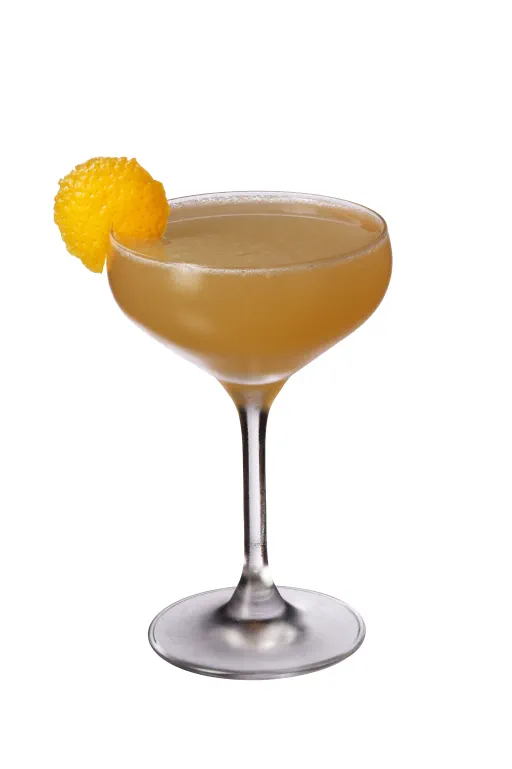
| 1 1⁄2 fl oz | Cognac (brandy) |
| 1⁄2 fl oz | Cointreau L'Unique triple sec liqueur |
| 1⁄2 fl oz | Ferrand Pineau des Charentes (chilled) |
| 1⁄2 fl oz | Lemon juice (freshly squeezed) |
| 3 drop | Saline solution (20g sea salt to 80g water) or merest pinch of s |
Photographed in a Speakeasy Coupe 8.5oz
One serving of Sidecar (Difford's recipe) contains 148 calories
Recipe contains the following allergens:
Created by yours truly and much revisited and amended between July 2021 and December 2025.
For added complexity, I've replaced the spoon of sugar syrup most find necessary to balance a Sidecar with a splash of Pineau des Charentes blanc.
Sidecar - classic recipe
Sidecar Royale - a Sidecare charged with sparkling wine/champagne
Apple Cart - a clavados-based Sidecar
Biblical Sidecar - a spicy Christmassy sidecar
Biggles Sidecar - with ginger liqueur
Chelsea Sidecar - gin-based
Chocolate Sidecar - with crème de cacao and port
Eastern Raspberry Sidecar - with sake and fresh raspberries
Gennaros Sidecar - with limoncello
Grand Sidecar - Difford's two-ingredient Sidecar
Lady's Sidecar - with orange and lemon juice
Champs-Elysees
Marignay

Makes a minimum of 25 cocktails.
Shipping and applicable tax calculated at checkout.
Orders are processed by a licensed Fulproof retailer. The buy now button is added simply for convenience.
* May not include all ingredients. Price per cocktail is an estimate based on cost of one cocktail with ingredients shown above and does not include shipping.

Fruity, yet balanced and well-weighted with just enough spirituous bite. Rum acts as a base while gin lightens and lifts.
View more
A delicately bittersweet Italian brandy and grappa Boulevardier with amaro liqueur and vermouth amaro.
View more
Tropical but far from sweet, led by an interplay between mezcal, pineapple and lime, spiced by cinnamon, with bourbon providing this sour's underlying...
View more
A Pineapple Mezcal Margarita with chili and cinnamon spice.
View more
A superbly refreshing, bittersweet, zesty fizz.
View more
Comments & Discussion
Whilst this was less complex the balance really won me over.
Both will be regulars on the rotation.
Showing the first 10 of 14 comments.
View 14 comments and discussion