



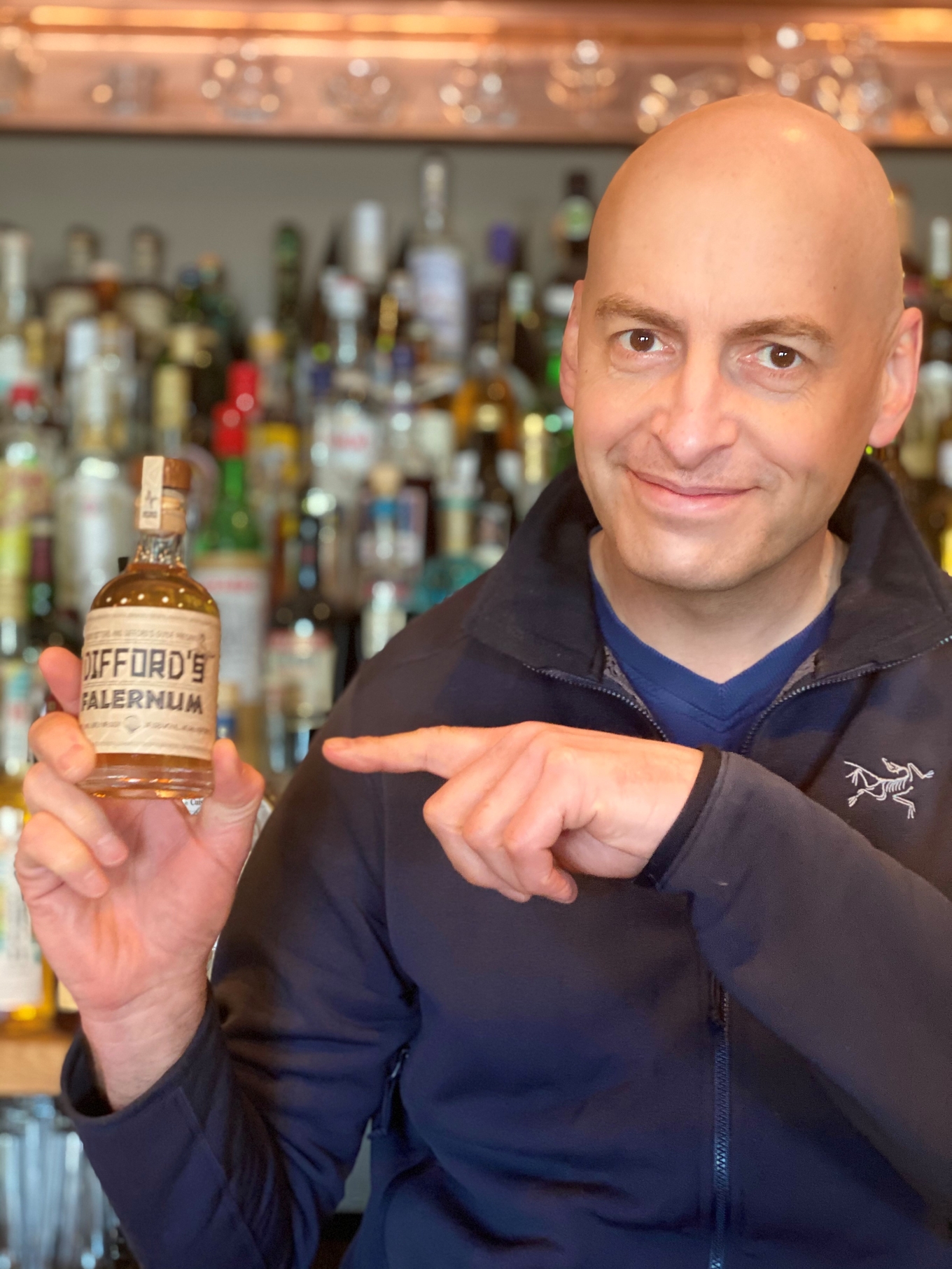
Words by Simon Difford (something of an autobiography)
Best known as a drink writer and publisher, Simon Difford has been involved in nearly every aspect of the drinks industry, from operating his own liquor store and wholesale company to importing spirits and brand creation.
Simon's writing and publishing career began in 1997, when he founded CLASS Magazine, a title that became the leading UK bar publication before he sold it in 2001 as the business moved online. Simon has since published cocktail and spirit books and remains the editor-in-chief of this website with a mission to help "discerning drinkers" discover what to drink and where to drink it. He has also contributed to the launch of numerous brands, most notably St-Germain, the elderflower liqueur, and is behind the creation of London Cocktail Week.
My story
When I turned 50, Paloma, my wife and business partner, suggested I add my story to those of the other people from the drinks industry featured on this site. I realise it goes on a bit, but I had a busy half-century...
A fishy start
I grew up in the London suburb of Bromley and didn't do well at school, so I was invited to leave in October 1983 when my teachers realised there was little chance of my passing any exams. With no obvious career, I worked as a labourer for a small building contractor.
Building sites shut down for a couple of weeks over Christmas and a girlfriend's father, Ken Brown, asked if I would spend my period away from construction helping him in his business. This basically involved carrying and delivering frozen shrimps and smoked salmon to London's sandwich bars. A step up from carrying bags of cement.
I never made it back to the building industry, as with Ken's help and initially his spare van, at 18 years old, I started what became Chariot Supplies, adding mayonnaise, tinned tuna and other fish-related sandwich fillings to what I sold to London's snack bars. I named the company while sat in traffic next to the statue of Boadicea on the Embankment. I was a white van man doing daily battle in London's traffic and the chariot with rearing horses and blades on the wheels seemed appropriate.

A school friend called Dom, who then looked a little like Neil from The Young Ones, designed Chariot Supplies' logo, originally with three horses. He decided this looked somewhat crowded, so removed one horse from his artwork. Several years later, when branded packs of shrimps were being produced, the printer pointed out that there were two horses but nine legs. I recounted this story to Dan Malpass, our long-time Art Director, and he has used the horse with the extra appendage on the spines of our books for a number of editions after.
My 'fish business' demanded that I crawled out of bed at 4:15am each morning, but with customers such as the fledgling Pret A Manger chain, it was a good business, so good that I was able to buy a three-bedroom house in Bromley at the age of 20. Due to rising damp, dry rot and woodworm, it became something of a Grand Designs project, to the extent that I removed the downstairs floor and walls as part of my remodelling and refurbishment. My knowledge from time spent working on building sites was put to good effect.

Double glazing salesman
Eager to try something new and preferably not involving early morning starts or smelly fish, I sold Chariot Supplies in October 1989. After six months helping integrate my business into an existing wet fish company, I was offered a job by a firm I used to buy mayonnaise from. I ended up selling for them on a self-employed commission basis, selling gherkins and other canned and jarred food products to cash-and-carry and other wholesalers. It was the first time I'd gone to work in a suit and a car rather than a van. Truth is, I missed the van and had money to invest, so I set about also pursuing some other business ideas.
One was Stick 'n' Spud, the first of what I hoped to become a franchised chain of fast food shops offering a vast choice of fillings served in a freshly baked, still-warm French stick or a steaming hot jacket potato. I managed to establish, and then sell, the franchise to the first unit on Church Street, Croydon.
I also dabbled with a double-glazing showroom in Biggin Hill, Kent, which I took on a franchise basis from a chap called Jeff Dolan, whom I met when he came to sell me new windows for my house. You learn a lot about both selling and people while sat in another family's house, trying to hold a conversation, while simultaneously calculating their quotation for replacement windows and struggling to rescue your calculator back from their annoying children. "But we have a 25mm gap and espagnolette locks" would be the kind of line that would clinch me the contract.
The lure of booze
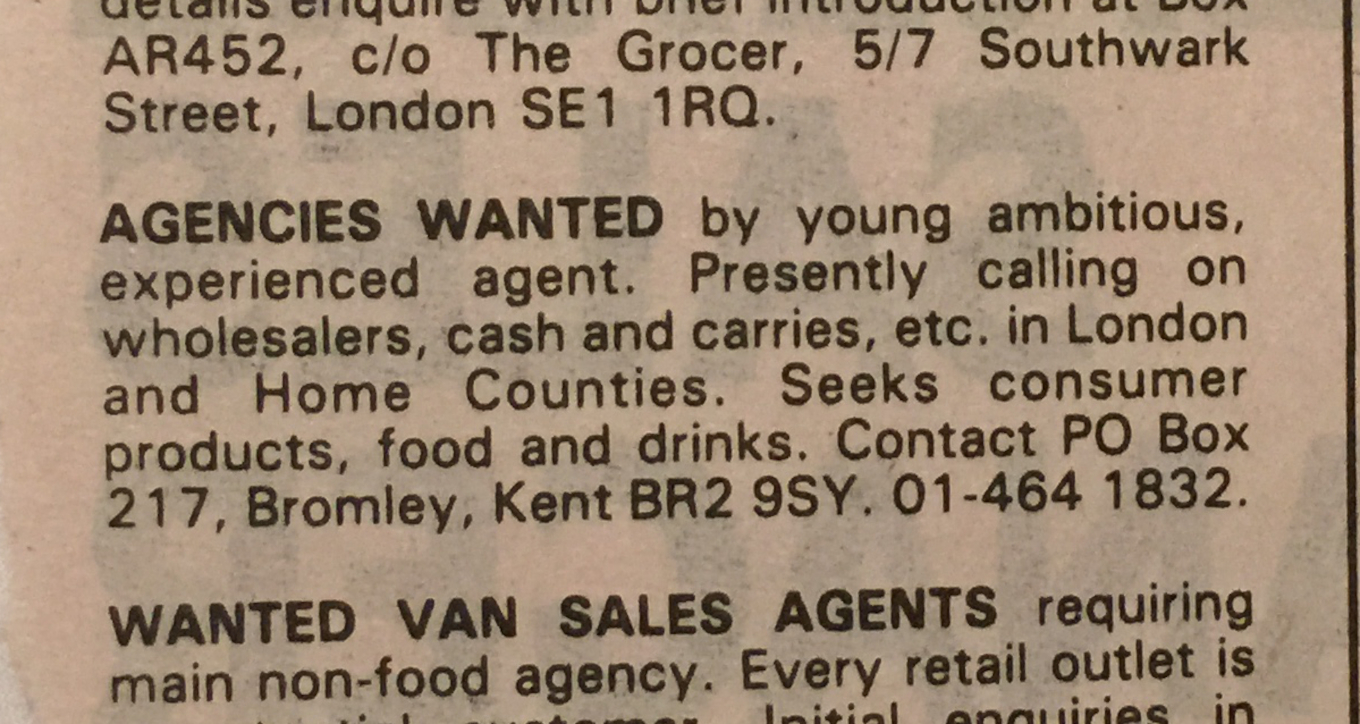
I was still also selling canned and jarred food products, and I put an advertisement in the Grocer Magazine seeking other agencies. I was approached by an enthusiastic chap called Stan Sklar, who imported what then appeared to be weird and wonderful spirits such as aquavit, Wray & Nephew overproof rum and Ouzo 12. His vast catalogue of spirits and liqueurs certainly appeared more interesting than canned food, so in 1989, at the age of 24, I started in the drinks industry.
Stan had a vast quantity of miniature bottles in-bond which he wanted to clear. These comprised a wide range of speciality spirits and liqueurs, including miniature versions of mezcal, complete with a worm inside each bottle. None of the wholesalers I offered these cut-price miniature bottles to were interested, so I started calling on liquor stores, only to be told that they'd buy a dozen of each but not the cases of twelve dozen they came in. I saw a business opportunity and started buying from Stan myself and splitting the cases.
I called my new enterprise 'Little Tipple' and started flogging miniature bottles out the back of a van to liquor stores by the dozen, just like I'd sold frozen seafood and canned tuna to sandwich bars a few years earlier. That upset a chap called Malcolm Cowen, who had something of a monopoly on miniatures, and one day at the London Wine Trade Fair, he pointed out rather unsubtly that I was potentially in breach of licensing laws.
Rather than abandon the new business, I figured that if I bought a liquor store, I could also obtain a retail liquor licence that would enable me to legally sell any quantity of alcohol to anybody (as long as they were over 18 years old and weren't a policeman in uniform or a prostitute, if I remember the old licensing laws). So I leased a shop near my old school in Hayes, Bromley, which I named 'Tipples', and I turned it into a treasure trove of beer, wine and spirits with cask ale on hand-pump dispensed in plastic milk containers. (More recently we've sold beer the same way from our present East Sussex store.)
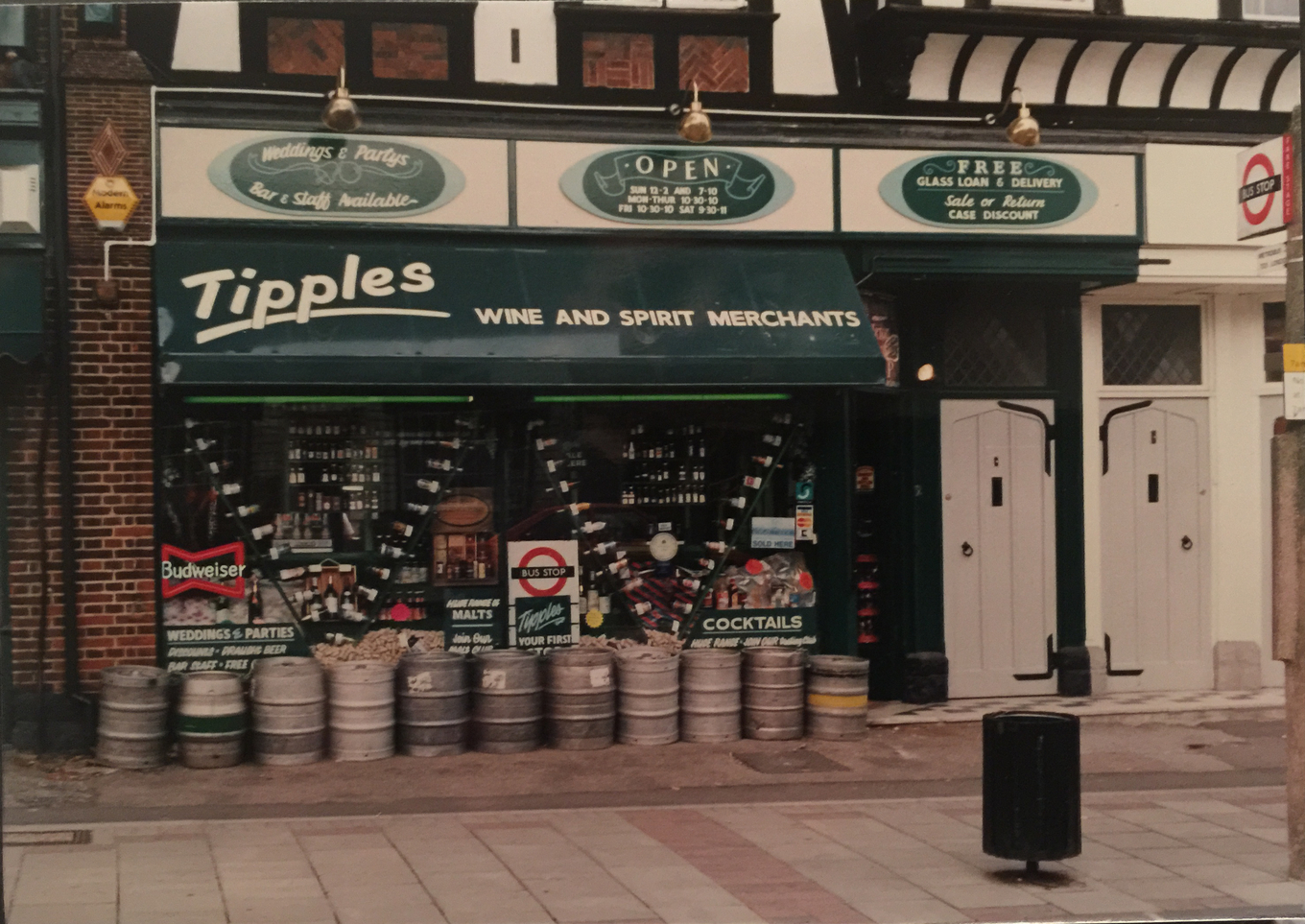
I acquired the shop in 1990, when the news was buzzing about the imminent introduction of the European free market (which came into force on 31 December 1992). I was sure the government would have to start reducing alcohol duty to narrow the gap with neighbouring France. They didn't. Instead, they bizarrely continued to increase excise duty, inevitably leading to a surge in cheap liquor being brought back from France. The so-called 'booze cruises' hit my little shop on the south London-Kent borders, as did the Uniform Business Rate, also introduced by the Thatcher government around the same time. The impact on other traditional specialist off-licences was also brutal, hitting my miniature business as independent liquor stores started stocking toilet rolls and breakfast cereal in preference to my weird and wonderful miniatures.
Fortunately, by then I'd discovered a market for selling full-size bottles of speciality spirits, liqueurs and even bar tools to the rapidly growing number of bars serving cocktails. This came about thanks to the husband-and-wife owners of an American diner called Dillinger's, a few shops down the parade from mine. Malcolm, was into his cocktails and their restaurant had quite a reputation for them. He encouraged me to stock more cocktail-oriented products, which he and other restaurant and bar owners started buying. I became one of the first wholesalers in the UK to sell products like Monin Syrups, and I remain friendly with the folk at their importers, Bennet Opie, to this day.
In 1994, I decided to sell the shop and focus on building the wholesale business, operating from a huge brick storeroom I built in our back garden and a warehouse I rented in London's Catford. I was working ridiculous hours, but had a loyal customer base for my very specialist product range and was making a good margin. Then, however, an unexpected health issue stopped me in my tracks.
I was going deaf in my right ear, and it turned out there was a growth in my ear canal. I needed an urgent operation with potentially weeks in hospital and months off work. Impossible when self-employed. Upon hearing the news, my rep from what is now Diageo suggested I call John Coe of Coe Vintners, the family-run London drinks wholesaler. I did, and two weeks later, in October 1995, John took over my wholesale business, promising a pay packet while I was in hospital. My wife had only recently given birth to our daughter Stephanie, so John truly rescued both me and my family.
My ear was pretty much cut off, and what shouldn't have been there scooped out. It bloody hurt, but I only had a couple of weeks off and, to the amusement of new colleagues at Coes, I returned to work with my ear sewn back on and a turban-like bandage wrapped around my head. (Check out the scar next time you see me.)

While working with Coe Vintners, I saw an opportunity to start importing speciality spirits and liqueurs as an agency house. On behalf of Coe Vintners, I sourced products like Teichenné schnapps and one day had a very memorable phone call with Bob Nolet of Ketel One vodka, which went along the lines, "we really like your vodka, can we have the rights to distribute in the UK please." Bob gave John the agency, and the company went on to become InSpirit Brands. I loved what I was doing, but it was not my business, and I wanted to work for myself again.
CLASS magazine
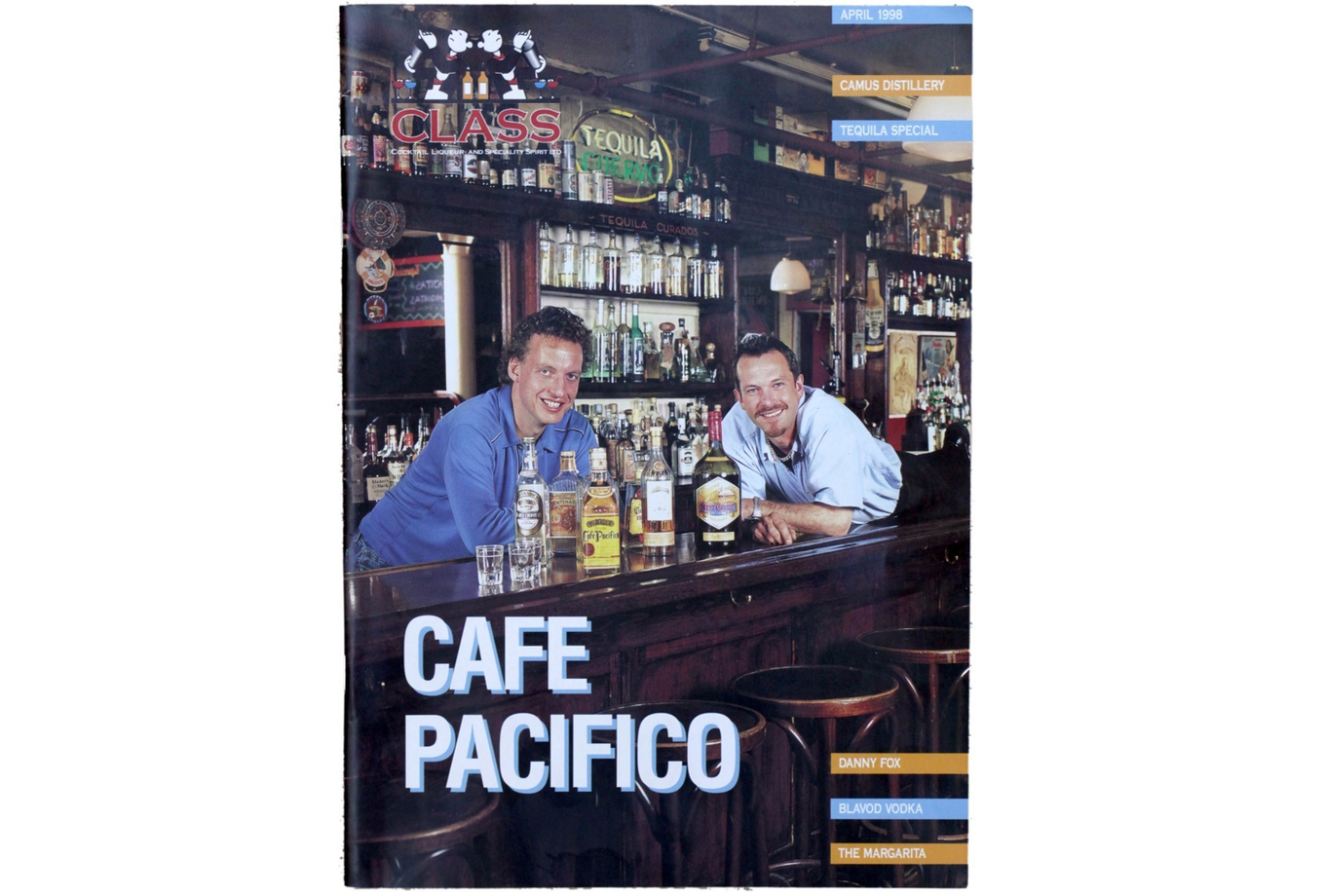 When I had my liquor store, in those pre-Internet days in the residential streets of South London, I wanted to find a way to market my portfolio of unusual spirits and liqueurs to a wider audience. Mail-order then seemed the answer, and I envisaged a quarterly magazine come mail-order catalogue with product information and cocktail recipes. I printed an eight-page dummy to garner support from suppliers, but with no publishing experience, it didn't progress beyond a dream.
I mentioned the idea to John Coe when he asked what I was going to do as I resigned from Coe Vintners in May 1997. This led to John investing, and when I established the company I still work in today, John Coe and I were equal shareholders, with our mutually trusted friend, David Gunton, owning the deciding two per cent in case of a disagreement. I called the business CLASS, an acronym of Cocktail Liqueur And Speciality Spirits. I started work on the mail-order catalogue, but quickly forgot it as I also established what would become the first bartender's magazine of its type.
When I told John about the magazine, he replied: "What do you know about bartending?" It was a fair question, as although I'd supplied bars for years and knocked up plenty of cocktails to test new products, I'd never worked in a bar. Consequently, I started working shifts at Café Sol in London's Greenwich, a Tex-Mex bar and restaurant. The spirits were on optic and the liqueurs in the well. Blenders constantly hummed, producing margaritas and frozen daiquiris, but it was invaluable bartending experience.
By August 1997, I'd written and published the first issue of CLASS magazine. That first pink-covered issue had a mere 16 pages and wasn't much of a magazine. It, along with other early editions, are now something of an embarrassment. However, the pagination, quality and circulation quickly grew as CLASS took over my life. Given the hours and my new lifestyle – particularly my Met Bar membership, divorce was perhaps inevitable.
London's Shoreditch was still a place with more hookers and strip clubs than bars. It was both central and cheap, so now, a single man with no money, I moved our office there and bought a warehouse-conversion apartment around the corner. As Shoreditch quickly morphed into the bar, nightlife and creative hub it is today, so I also witnessed the growing internet boom with daily news of dot.coms, with outlandish valuations. I approached John and said we should seek backing to build a full e-commerce drinks website. Despite his doubts that I'd find backers, a consortium of city types injected £1.2 million. I was now running a magazine publishing and dot.com company.
Those early dot.com days were crazy. Our new Chairman encouraged me to spend money, saying, "Dear boy, it's all smoke and mirrors. If you make a £1 profit, then this company is worthless. However, lose a million, and I'll make you rich." Accordingly, we invested heavily in building our website, engaging one of the biggest and most expensive web agencies at the time, Blueberry.net. Sadly, they went bust in the 2001 crash, taking our site and all the backups with them. (Lesson learned, we now have Harry and our brilliant team of in-house developers.)
We'd spent most of the money, had a large wage bill with heavy monthly losses, and we didn't have a website. Understandably, the board wanted to sell CLASS, the company's only asset. Despite my protestations, I was outvoted and the magazine was sold to William Reed Business Media in August 2001.
I managed to persuade my fellow shareholders to let me try to build something with the funds raised from the sale of the magazine. With the help of Theodora Sutcliffe (who occasionally still writes for Difford's Guide to this day), I used the content I'd written for the website to produce a series of guidebooks. By November 2001, we'd published our first 'Cocktails' guide, a guide to liquor called 'Drink & Drinking' and a 'London Pub & Bar Guide'.
That first cocktail guide already had a number of cocktails I'd created, and publishing a collection of recipes led me to start spending most of my evenings experimenting with different cocktail recipes. People like Dick Bradsell, Jared Brown and Anistatia Miller became regular visitors to my apartment where I'd installed a Hoshizaki ice machine in preference to a dishwasher. Keen to see how my recipes stacked up against others, in 2002, I entered my first cocktail competition, Havana Club's Best Daiquiris in London. Much to my amazement, I won.
The company at this stage employed just Dan Malpass and myself. The two of us continued updating the guidebooks and produced books for drinks brands, but we needed investment to grow. Enter Ricky Agnew, then owner of Marblehead, a drinks importer based in Milngavie near Glasgow.
Ricky became the majority shareholder. He liked the idea of launching a quarterly drinks magazine aimed at the UK and American markets and pledged to back such a publication. Dan and I enthusiastically went about producing 'Difford's Guide Quarterly', each edition featuring bar reviews from three different cities - one always being an American city, one British and one international, along with features on spirits and cocktail recipes. I secured listings in Barnes & Noble and Borders bookstores across America as well as chains in the UK. We were slowly building circulation, but despite this and sales of our main Difford's Guide to Cocktails continuing to grow, costs were rising, and Ricky's ambitions to become a publisher started to dwindle.
A meeting with Rob Cooper in New York opened the door to my next major endeavour. Rob and his father, Sky, then owned Chambord liqueur and had long been regular advertisers going back to the days of CLASS magazine. I went to the city several times a year and often went drinking with Rob. On this particular visit, Rob shared two secrets with me: that they were in the process of selling Chambord and that he was working on ideas for a new liqueur, and he wanted me to try his prototype.
The next day I met him at New York's Penn Station, where we took the train to his family's distillery in Philadelphia. On the way, he repeatedly told me that I'd love it, but it was only when I had the tasting glass to my lips that he told me it was the world's first elderflower liqueur. Much to his disappointment, I told him that I didn't like it, and that afternoon the reformulation of what would become St-Germain started.
It was obvious that he'd spotted a gap in the market and I was sure his elderflower liqueur was going to be a hit. Hence, I was keen to accept the job he offered me to market this and other products he wanted to create. However, I was contracted to the publishing company and I had Ricky and Dan to think of. That did not faze Rob, and he started to negotiate with Ricky to buy his shares in the publishing company. Consequently, Dan and I found ourselves working for Rob. The quarterly magazine was quickly abandoned as St-Germain liqueur became our main focus.
There was a lot to do, and I wasn't impressed by any of the pitches I received from London PR companies; hence, Hannah Sharman-Cox joined us, initially just for a few weeks to help out. She was great at drumming up publicity for the liqueur, and I ended up making St-Germain cocktails at places ranging from an art gallery in London to MoMA in New York. I also had a vintage Citroën H van restored and sign-written, and it became our portable shopfront, which we shipped to exhibition halls and even muddy fields around the UK.
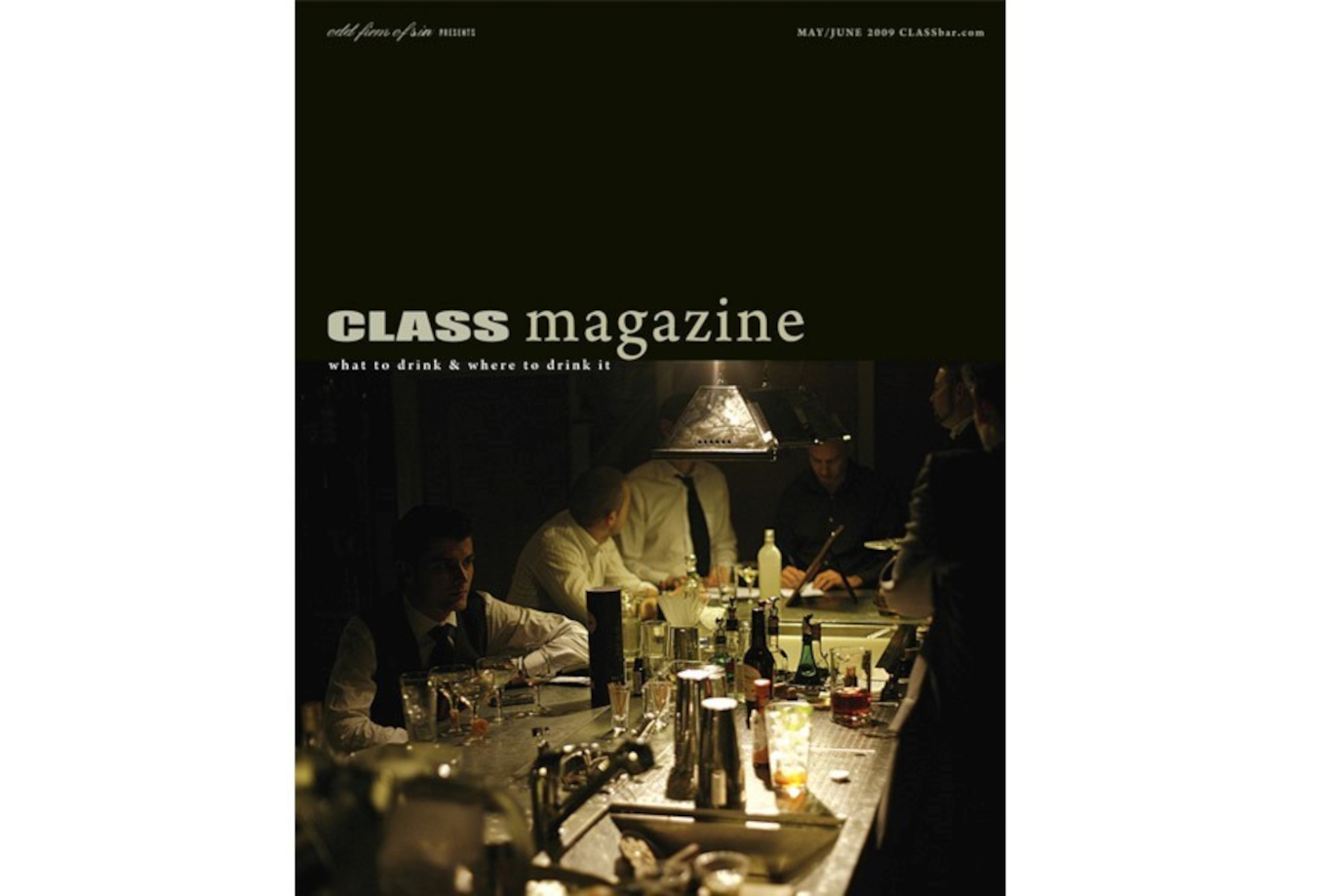 Rob had created a brilliant brand, and St-Germain proved a great success, teaching me much about launching and marketing a liquor brand. However, disappointingly, my minority share was in our publishing company, not St-Germain. Hence, in August 2008, I borrowed the money required to buy Rob's shares and, with Hannah and Dan's help, set about creating diffordsguide.com and re-invigorating our book business. Not long after, I also re-acquired the publishing rights to my long-lost CLASS magazine.
London Cocktail Week
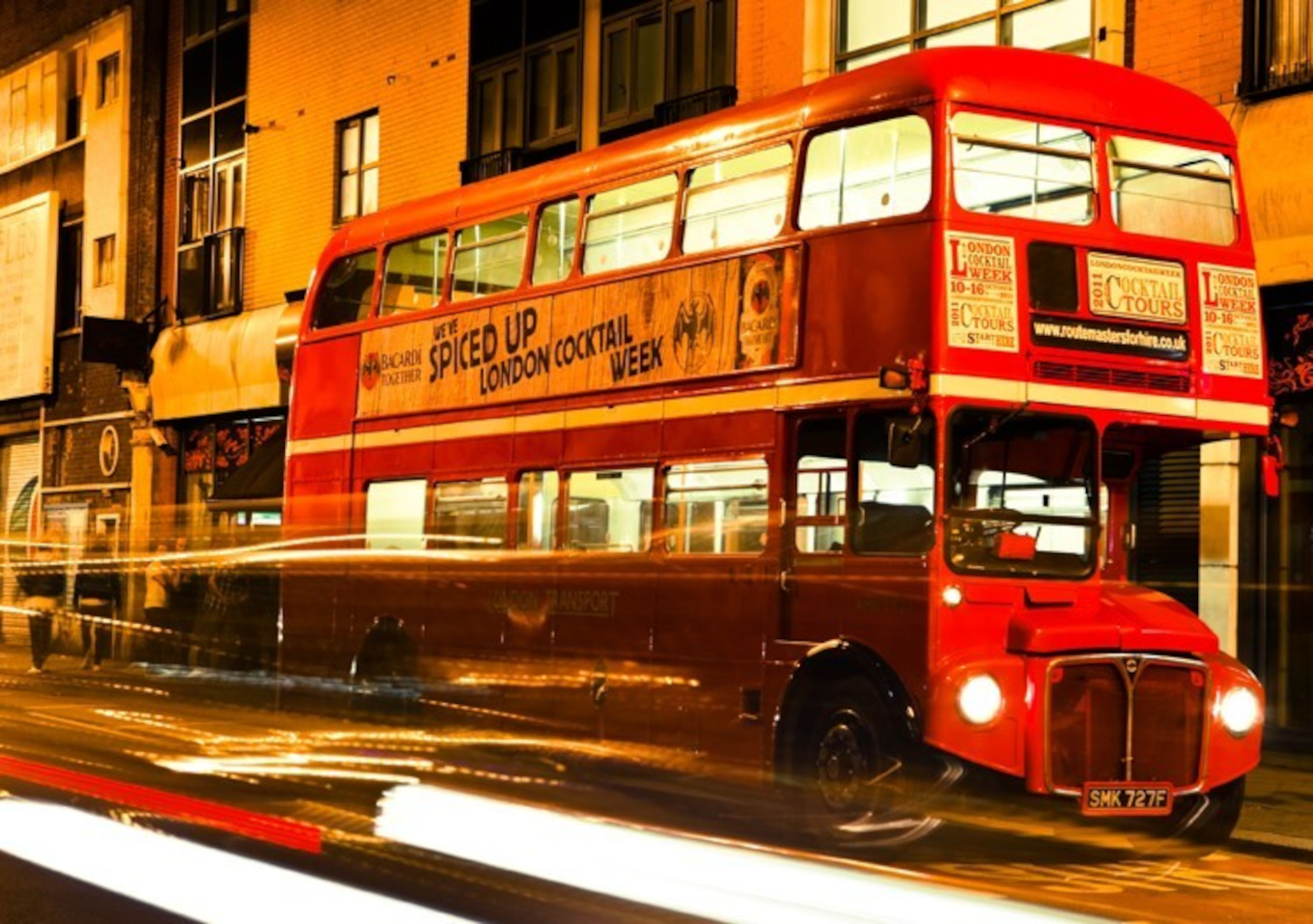
In 2009, Hannah and I visited Tales Of The Cocktail in New Orleans and then Bar Convent in Berlin. I had been going to Tales since its second year and had witnessed the festival's phenomenal growth. Then in Berlin, I loved the buses the organisers of BCB had laid on to transport attendees between the city's leading bars. They also produced a booklet with notes about each bar and the bus routes. Why didn't London have a cocktail festival? I trademarked the name London Cocktail Week and Hannah, and I basically borrowed elements of both Tales and BCB to create our own festival, with the first London Cocktail Week held 11-17th October 2010, complete with buses and bar maps.
Naively, I set out to break even rather than make a profit, and predictably the first London Cocktail Week cost me a fortune. The next couple of years were not much better, but anyone who attended one of our CLASS Awards nights will know that Hannah is brilliant at both organising events and persuading people to take part. Hannah and our team built London Cocktail Week into an incredible festival and by the third year we had well over 10,000 attendees.
London Cocktail Week was fabulous, but it sucked up too much time and resources from Difford's Guide. Everyone from our web developers to our graphic designers was pulled away from working on our website, and I didn't have the financial resources to cope with the festival's rapid expansion. So in February 2014, I sold London Cocktail Week to my friends Sukhinder and Raj Singh, who have given Hannah and her team the resources required to build this along with their wine, beer and whisky festivals.
Now to the future
Well, that's briefly what I did. As to the present and future, my focus is now very much on this website. Helped by Paloma and our amazing team, including Dan, who has now had the misfortune of working with me for more than 25 years, and Harry, our resident IT wiz, to make Difford's Guide a global go-to resource with an opinion for all things drink and bar related.
I'd probably have made more money if I'd stayed in frozen fish, or even the building industry, but I love the drinks industry and owe a great debt to the sadly long-since departed Stan Sklar for introducing me to it. I feel proud to work in such an incredible industry full of smart, interesting and often quirky/crazy characters. Without the support of my investors (Sukhinder and Raj Singh), family (mum and dad are also investors) and friends (particularly John Coe and Bob Nolet), I'd not be living the fun and rewarding life I live today with my name over the door. Difford's Guide is the creation of many people and I am lucky to be its custodian and champion. Cheers.