The story behind Ferrand Dry Curaçao
Words by Simon Difford
Orange liqueurs are back-bar essentials, key to classics including the Margarita, Sidecar, Mai Tai, Cosmopolitan, White Lady and hundreds of other cocktails. "Curaçao" appears on many labels, but it's not a flavour. It's a dry, windswept Caribbean island 40 miles off Venezuela, and the liqueur bearing its name was born from a failed Spanish attempt at agriculture.
An orange that nobody wanted to eat
In the early 16th century, Spanish colonists planted Seville bitter orange trees on Curaçao, but the island's thin soil, salt wind, and relentless sun were entirely wrong for them. The trees were stunted and the fruit they produced knobbly, ferociously bitter and with almost no flesh worth eating. The new orchards were set to be grabbed up.
However, somebody dried the peel, and in doing so discovered that this supposedly useless fruit carried one of the most intensely aromatic citrus skins yet discovered. Where a sweet orange draws its oils inward as it ripens, the Laraha keeps everything in the skin. Dried, it becomes a concentrated store of bitter-orange aromatics that survives storage and shipping. This single attribute is the reason the entire orange liqueur category exists.
The Dutch make it a business
The Dutch East and West India Companies had been shipping exotic dried peels back to Europe since the early 1600s, so when the Dutch took Curaçao in 1634 they knew precisely what they had. It landed at exactly the right moment. The Low Countries were the first to distil spirit commercially at any scale, and their raw grain spirit was, to put it politely, challenging. Juniper had already given them genever. Laraha peel gave them something fruitier, and orange curaçao was born, a couple of hundred years before the French became involved.
The French take the recipe and add brandy
The French shift, in the 1860s, is the one that matters to this story. Rather than infusing Laraha peel into raw grain spirit, French houses started infusing it into brandy and cognac. The base spirit stopped being something to disguise and became a key ingredient, giving the liqueur weight, roundness, and length.
They also built layers of flavour. Late 19th-century curaçaos such as Cusenier's are much more complex than a single orange infusion could account for, and the technique behind that is a very French idea called mise en valeur, using secondary botanicals not for their own flavour but to throw the main botanical into relief. A little vanilla, a little nuttiness, a suggestion of dried fruit, none of them announcing themselves, all of them making the orange taste more like orange. It is the same logic a chef uses when adding a pinch of salt to a caramel.
The word "triple", incidentally, most likely refers to the number of infusions rather than distillations; at least that's what the 1837 Artaud Encyclopedia suggests. Jean-Baptiste Combier, a confectioner in Saumur made the first triple sec in 1834, brothers Adolphe and Edouard-Jean Cointreau followed in Angers in 1875, and it is worth remembering that Cointreau was originally sold as Curaçao Triple Sec Cointreau. The two categories were then not as separate as the modern back bar suggests. Then, as now, there is no legal definition of curaçao, orange liqueur or triple sec anywhere. The only rule that applies is that a "liqueur" must contain at least 100g of sugar per litre.
And then it all went wrong
The 20th century was not kind to curaçao. Cocktail culture collapsed, the surviving orange liqueurs got sweeter, thinner and cheaper, and the category's most visible survivor was blue curaçao, a product whose defining characteristic is a dose of E133 food colouring, launched to give bartenders something to point at. The rich, dry, brandy-based French curaçao that half the recipes in Jerry Thomas depend on simply stopped being produced. Bartenders working through the classics in the 2000s were reaching for a bottle that no longer existed and wondering why the drinks did not taste right.
Two men and forty-odd recipes
Alexandre Gabriel, owner and Master Blender of Maison Ferrand, had been quietly tinkering with orange liqueur recipes for the better part of a decade. He is also a man with unusually good relationships with French auction houses, which is how a cognac producer ends up with a library of 19th-century distillers' manuals and liqueur ledgers.
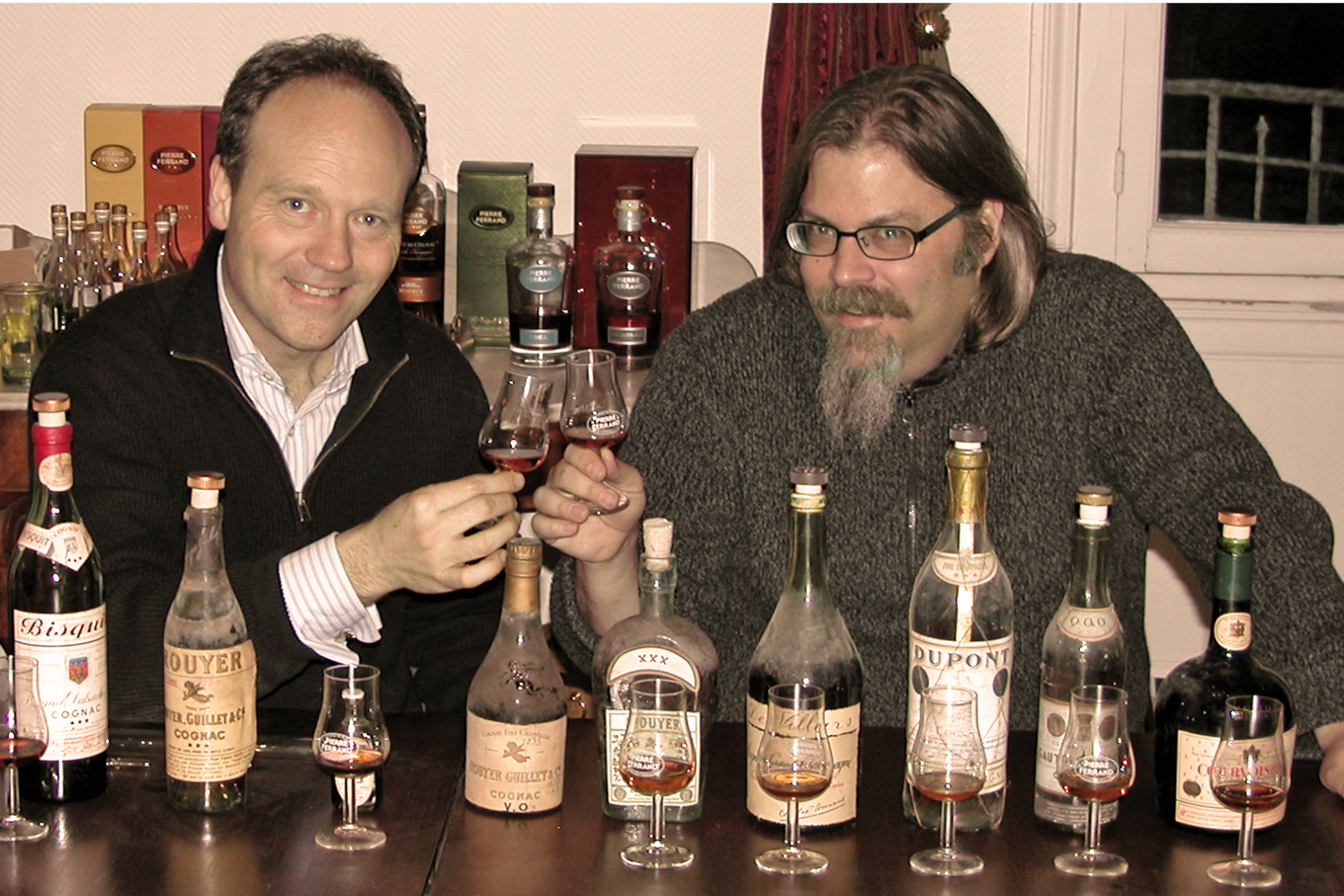
The drinks historian David Wondrich found out what Gabriel was doing while the two were tasting through another historical project and pointed out the obvious: the golden-age recipes he had spent years documenting kept calling for a curaçao that nobody made anymore. The two of them launched into an obsessive project that led them to sift through centuries-old archives, hunt down and taste long-forgotten curaçaos, and work through more than forty trial recipes before they had something they were both happy to endorse.
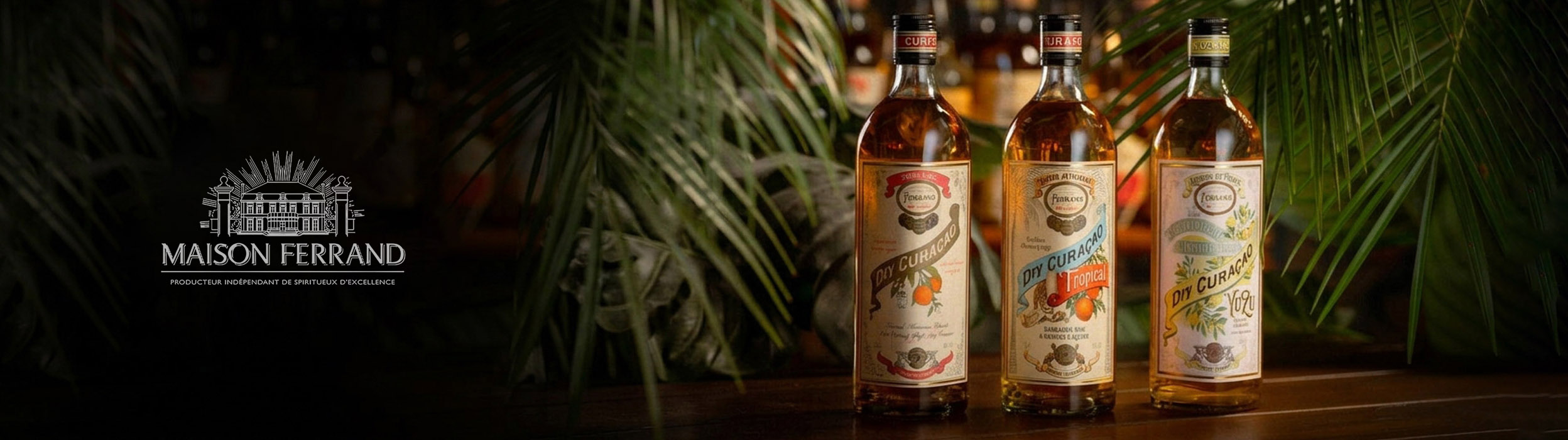
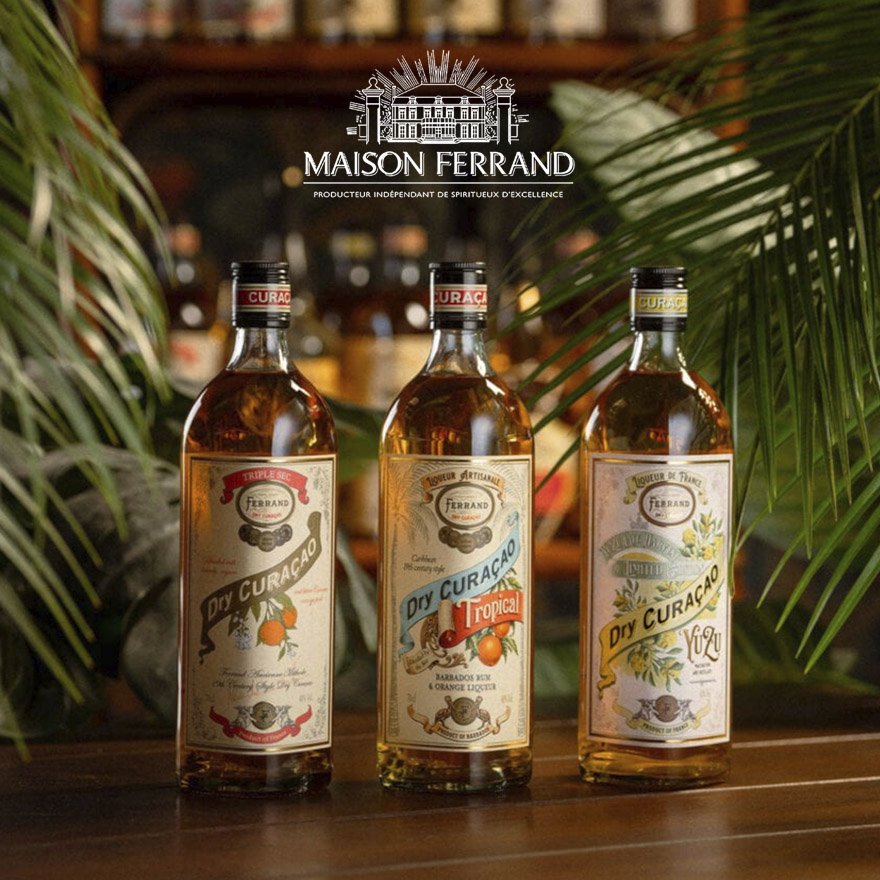
Ferrand Dry Curaçao launched in 2012 and immediately redefined the category. The bottle is now a fixture in most of the world's decent cocktail bars. The folk at Maison Ferrand describe the project as liquid archaeology, which sounds like marketing until you look at how much reading went into it. Two further expressions have since followed: Yuzu Late Harvest and Tropical, each taking the same research-first approach down a different road.

Maison Ferrand - Dry Curaçao
Status: Operational
Established: 2012
Visitor Policy: Not generally accessible
Website: Maison Ferrand - Dry Curaçao
Address: Château de Bonbonnet, 24 Chemin des Près, Ars, 16130
Established: 2012
Visitor Policy: Not generally accessible
Website: Maison Ferrand - Dry Curaçao
Address: Château de Bonbonnet, 24 Chemin des Près, Ars, 16130

Ferrand Dry Curacao
A French-style dry curaçao built on Laraha bitter orange peel, sweet orange and lemon peel, a vegetal infusion of grilled almonds, prunes, vanilla and

Ferrand Yuzu Late Harvest Dry Curaçao
Ferrand Dry Curaçao Yuzu Late Harvest is a dry curaçao-style orange liqueur designed to bring a bright, expressive citrus lift to cocktails.

Ferrand Tropical Dry Curaçao
Ferrand Dry Curaçao Tropical is a rum-based citrus liqueur from Maison Ferrand, designed to deliver a rum-forward profile for punches, Tiki, and other
