

The grape varieties used to make Sherry
Sherry can be made from six white grape varieties, all of which are traditional in the region and belong to the species vitis vinifera:
1. Palomino (AKA Listán Blanco or Palomino Fino)
2. Pedro Ximénez
3. Moscatel de Alejandría
4. Beba
5. Perruno
6. Vigiriega
However, Palomino dominates, and more than 95% of vineyards are planted with this variety.
Palomino
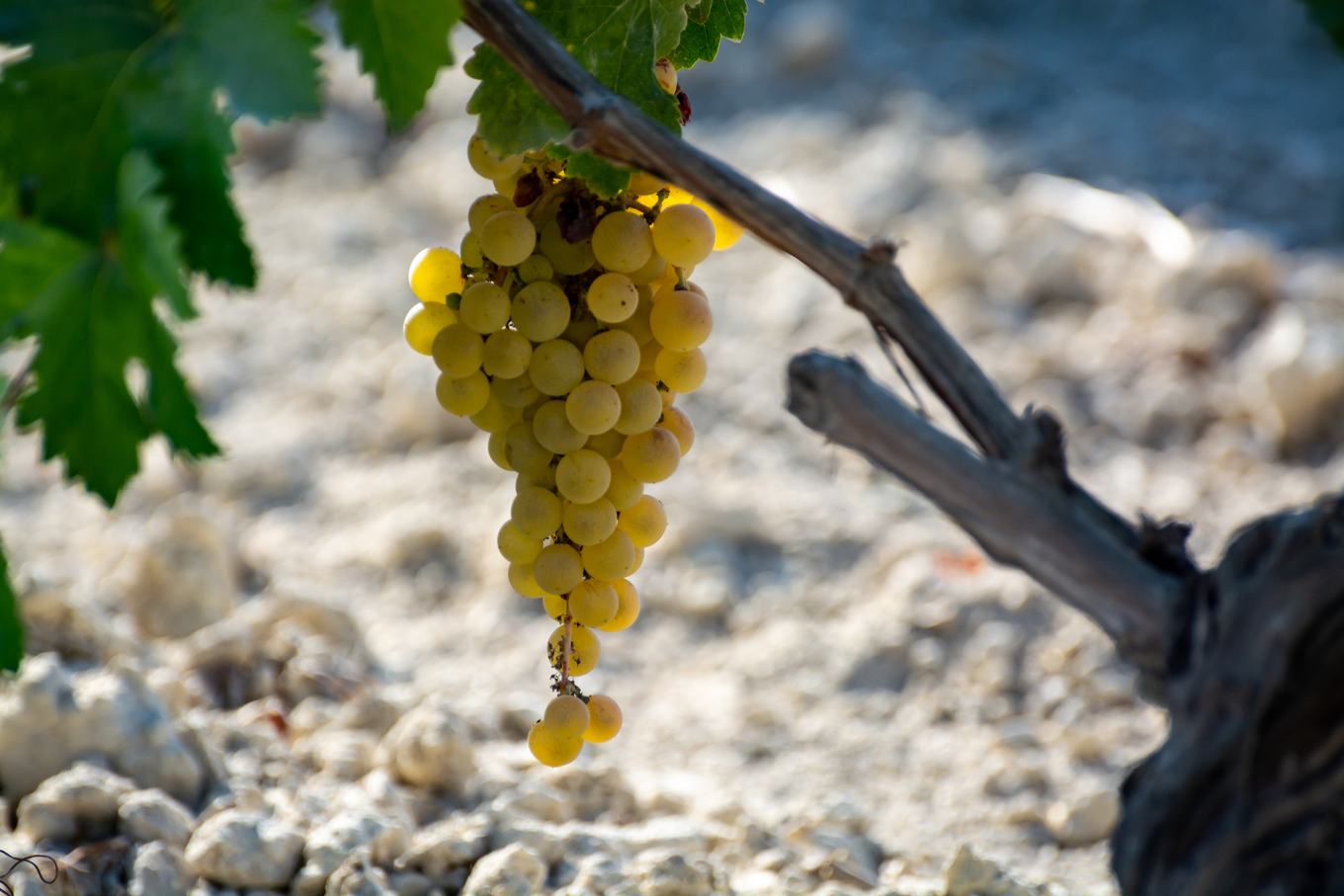
Palomino grapes (also known as listán blanco) are medium-sized with thin yellowish-green skins that turn more golden when ripe. They grow in long, cylindroconical clusters. Palomino grapes have moderate acidity (3.7 grams per litre) and low malic acid content.
The Palomino Fino subvariety is well adapted to the region and is resistant to parasites, so it has become the dominant variety in the region. This typically buds in the last two weeks of March, ripening between mid-August and early September.
Pedro Ximénez
Pedro Ximénez, often simply referred to as "PX", is the second variety and is mainly used in blends to sweeten Palomino-based sherries, but is also bottled as a single-varietal sherry.
In the Sherry region, Pedro Ximénez is usually planted on the lower slopes in arena and barro soils. Immediately after picking, it is usual to spread PX grapes out in "paseras" (special areas) to dry in the sun, so concentrating the flavours and sugar content. Known as asoleo (raisining), this results in grapes with a high sugar content (12.8° average Baumé) and acidity levels (4.5 g/l).
Pedro Ximénez is prone to fungal diseases, making it very sensitive to the humidity that poniente winds from the Atlantic bring to the Sherry region. Hence, Pedro Ximénez is the least planted of the region's three noble grape varieties, and due to its scarcity, D.O. regulations allow PX to be sourced from outside the sherry region, specifically Montilla and Málaga.
Moscatel de Alejandría
The third noble sherry variety, Moscatel de Alejandría, is also planted in arena and barro soils, and like Pedro Ximénez, it is mostly used in blends for sweetening, but is also bottled as a single-varietal sherry.
Like Pedro Ximénez, Moscatel grapes are often sun-dried or late-harvested to concentrate sugars and flavours.
While Pedro Ximénez sherries have found a good export market as a dessert wine, Moscatel sherries have only a small market outside of the region's local bars, where the variety is known as "Moscatel de Chipiona." Chipiona is one of the towns in the Sherry region, and this picturesque coastal town is renowned for the quality of its Moscatel wines, thanks to its sandy soils and proximity to the sea, which favour the wines' development.
Other varieties
Palomino emerged as the vine of choice for replanting vineyards after phylloxera, with PX traditionally sourced from Montilla. Moscatel survived phylloxera due to the Arena soil in which it tends to be planted, making it hard for the insect to reach the vine's roots.
Hence, these three noble varieties emerged and until recently were the only permitted varieties by the D.O. However, in November 2023, three of the region's heritage white grape varieties were added to the permitted varietals: Perruno, Beba and Vigiriega. In the years ahead, these varietals may help wineries replant to help alleviate the effects of climate change.

Sherry Cocktails
Sherry has been a staple cocktail since the 1800s, appearing in many punch recipes from the period. Today, sherry plays a key role in the world's leading

Lustau
Lustau organises its wines into several range categories (or gamas) beyond just by style: Solera Familiar (Family Solera) - the core, house range Almacenistas
