No alcohol
Medium
Boozy
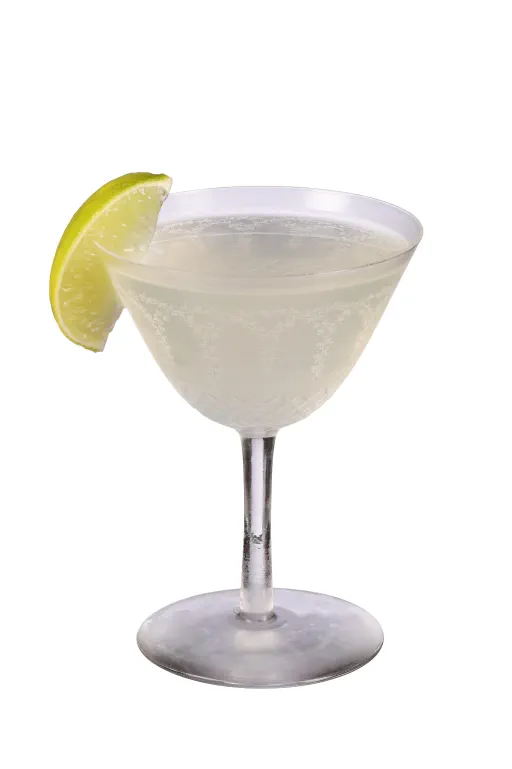
| 2 fl oz | Hayman's London Dry Gin (from freezer) |
| 2⁄3 fl oz | Lime cordial (sweetened lime juice) |
| 1⁄3 fl oz | Chilled water/mineral water |
Serve in a Coupe glass
One serving of Gimlet contains 143 calories
During the 17th century, English sailors came to understand that consumption of citrus fruit helped prevent scurvy, one of the most common illnesses aboard ships. Despite this, and John Woodall (1570-1643), an English military surgeon with the British East India Company, recommending that citrus fruit be part of sailors' rations, their use did not become commonplace.
In 1747, James Lind, a Scottish surgeon, conducted clinical experiments that showed citrus had an antiscorbutic effect. However, he believed scurvy had multiple causes, particularly ill-digested and putrefying food, bad water, overwork and damp living conditions; thus, he didn't advocate citrus as a single remedy.
Experience showed Naval officers and surgeons that citrus juice prevented scurvy, eventually leading Rear Admiral Alan Gardner to insist a daily ration of lemon juice be issued on board the Suffolk during a 23-week, non-stop voyage to India in 1794. As a result, there was no serious outbreak of scurvy. This voyage and Lind's earlier findings convinced the Admiralty to recommend lemon juice be issued routinely to the whole fleet. However, it was only after 1800 that the supply of fruit allowed this.
Once the benefits of drinking citrus juice became more widely known, British sailors consumed so much of the stuff, particularly lime juice, often mixed with their daily ration of rum and water ('grog'), that they became affectionately known as 'Limeys'.
We now understand that a Vitamin C deficiency causes scurvy and that citrus fruit contains the vitamin that helps ward off the condition.
The 1867 Merchant Shipping Act made it mandatory for all British ships to carry rations of lime juice for the crew. The fruit juice was preserved by adding 15% rum, but in 1867, Lauchlin Rose, a shipyard owner in Leith, Scotland, patented a process for preserving fruit juice with sugar rather than alcohol. To give his product wider appeal, he packaged the mixture in an attractive bottle and named it 'Rose's Lime Cordial'.
Legend has it that while the ratings drank rum, their officers drank gin, so they naturally mixed Rose's lime cordial with gin to make Gimlets. Hence, it is said that the creation of the Gimlet is the result of circumstance rather than clever mixing of ingredients, and to be honest – that's how it tastes if you try an un-chilled (they had no ice) 50-50 Gimlet. However, stirred over ice and mixed to more balanced proportions, the result is divine.
Story behind the name
A 'gimlet' was a small tool used to tap the barrels of spirits carried on British Navy ships, which may be the origin of the cocktail's name. Another story cites a naval doctor, Rear-Admiral Sir Thomas Desmond Gimlette (1857-1943), who is said to have mixed gin with lime 'to help the medicine go down'. Although credible, it is not substantiated in his obituary in The Times (6th October 1943), nor his entry in Who Was Who (1941-1950), and I guess pretty much every doctor in the Navy spurted a similar mantra at the time.
Vintage Gimlet recipes & references
Harry MacElhone's 1923 Harry of Ciro's ABC Of Mixing Cocktails
99. Gimlet.
Harry MacElhone, 1923
½ Coates' Plymouth Gin,
½ Rose's Lime Juice Cordial.
Stir, and serve in same glass. Can be iced if desired.
A very popular beverage in the Navy.
Harry Craddock's 1930 The Savoy Cocktail Book lists both a "Gimlet Cocktail" and a "Gimblet Cocktail".
GIMBLET COCKTAIL.
Harry Craddock, 1930
¼ Lime Juice.
¾ Dry gin.
Shake well and strain into medium size glass; fill up with soda water.
GIMLET COCKTAIL.
½ Burrough's Plymouth Gin.
½ Roses Lime Cordial.
Stir, and serve in same glass. Can be iced if desired
David A. Embury's 1948 The Fine Art of Mixing Drinks
In the "Roll Your Own" section (page 131) , David A. Embury comments
...the Gimlet is a Gin Rickey and is made with sugar, lime juice, gin, and carbonated water. It is served in a Delmonico or Sour glass. It is also served as a cocktail, omitting the carbonated water.
David A. Embury, 1948
Raymond Chandler's 1953 novel The Long Goodbye
The bartender set the drink in front of me. With the lime juice it has a sort of pale greenish yellowish misty look. I tasted it. It was both sweet and sharp at the same time. The woman in black watched me. Then she lifted her own glass towards me. We both drank. Then I knew hers was the same drink.
Raymond Chandler, 1953
The success of this recipe is dependent on temperature (use vodka from the freezer and cordial from the fridge), your choice of lime cordial [It works with Roses, which varies depending on where you are in the world, but homemade cordial is likely better.] and dilution! Water is a key ingredient, but make sure it's cold – this is a Martini-style cocktail.
Gimlet (Difford's recipe)
Gimlet (Schumann's recipe)
Eastside Gimlet
With a good/homemade lime cordial, also try:
50ml (1⅔oz) Gin (from freezer)
30ml (1oz) Lime cordial (chilled)
10ml (⅓oz) Chilled water

Makes a minimum of 12.5 cocktails.
Shipping and applicable tax calculated at checkout.
Orders are processed by a licensed Fulproof retailer. The buy now button is added simply for convenience.
* May not include all ingredients. Price per cocktail is an estimate based on cost of one cocktail with ingredients shown above and does not include shipping.
Cocktails suited to being enjoyed any time of the day.
View more
Palate-cleansing, pre-dinner cocktails, often bittersweet and moderately alcoholic.
View more
Spirit-forward and usually gin or vodka based with vermouth or another fortified wine, often with dashes of bitters.
View more
Spirit-forward cocktails have larger measures of spirituous ingredients and are sometimes described as being “boozy”.
View more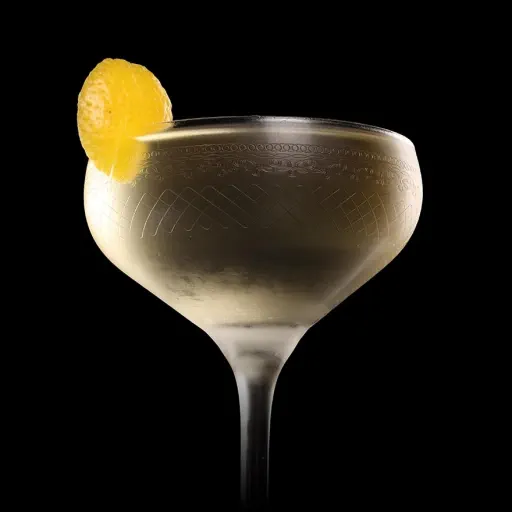
Designed to awaken the palate before a meal, this version of the Andalusian is bone-dry, with delicate bitter and herbal tequila-laced notes
View more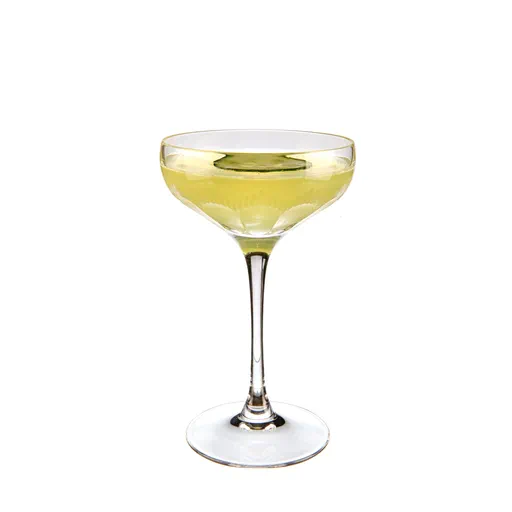
Sour, dry and fabulously complex with bittersweet herbal gentian notes over a gin base.
View more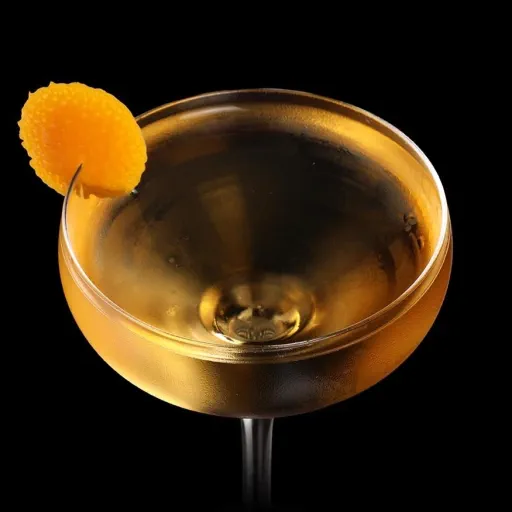
Dry and nutty, this cocktail was designed to accompany savoury dishes.
View more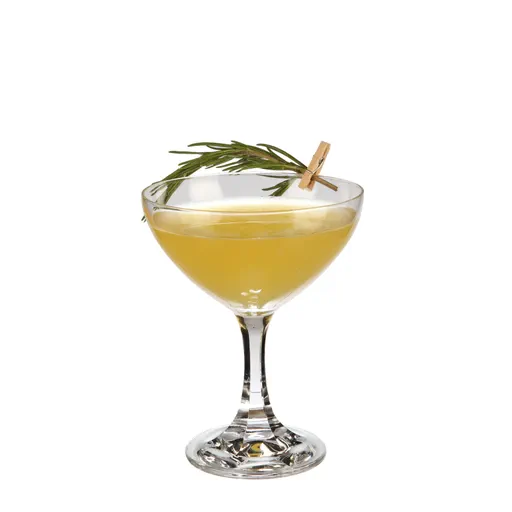
A riff on a Last Ward, boozy, bittersweet and aromatic.
View more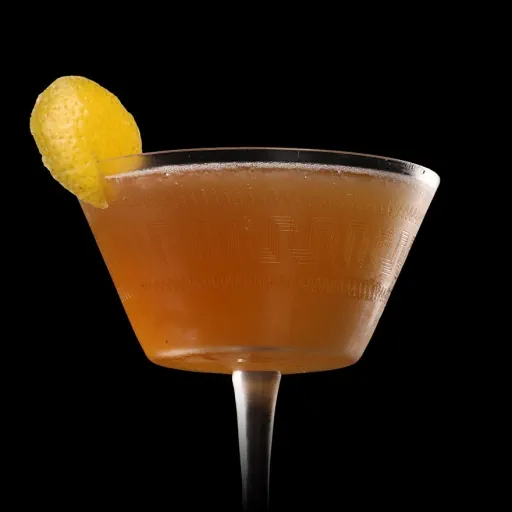
A beautifully balanced cocktail which harnesses sherry's nutty notes and cleansing acidity.
View more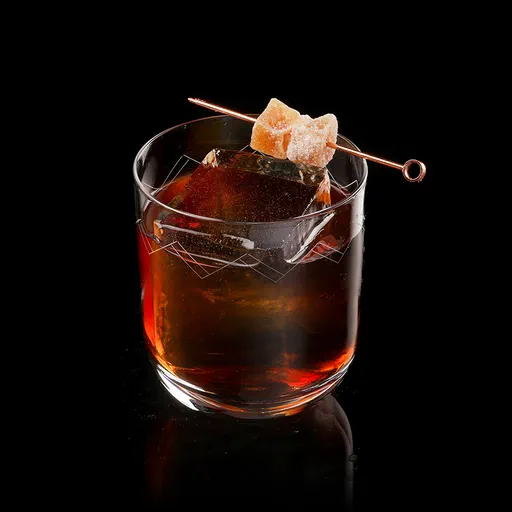
Rye whiskey and apple brandy combine harmoniously to form the backbone of this ginger-spiced, Manhattan alternative.
View more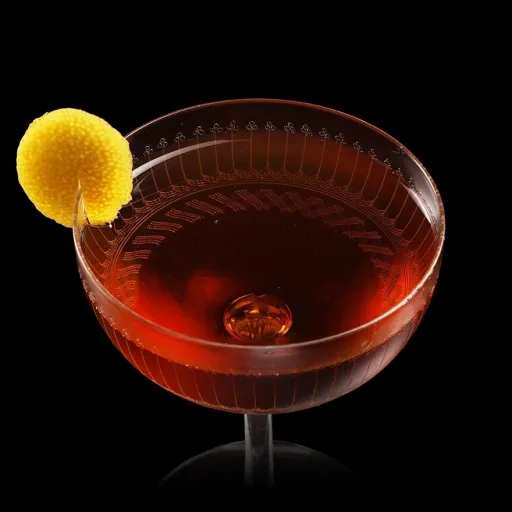
Amontillado sherry favours and balances this aperitivo, contributing acidity and yeasty nuttiness.
View more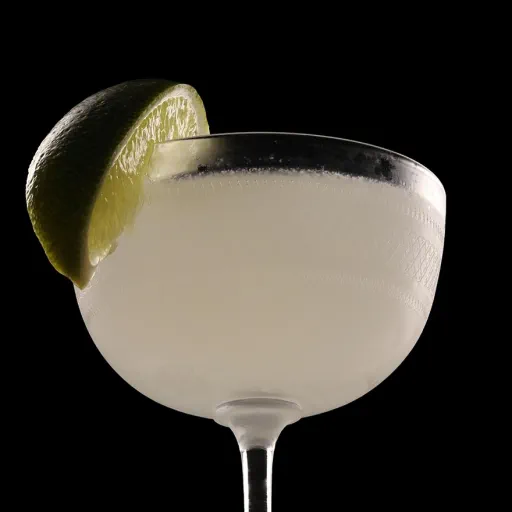
A gin-forward White Lady with lime in place of lemon juice.
View more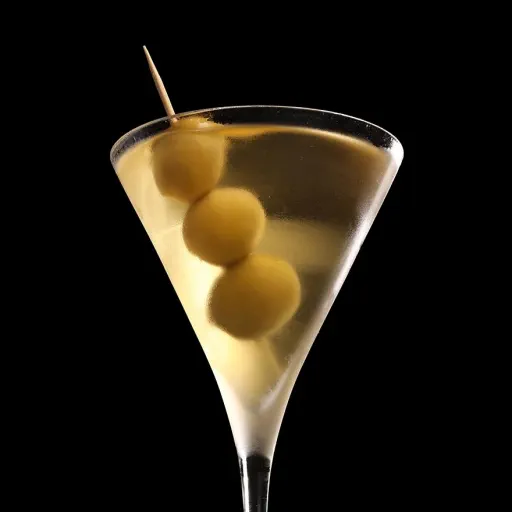
A bone-dry, delicious, marsala-influenced two-to-one Martini.
View more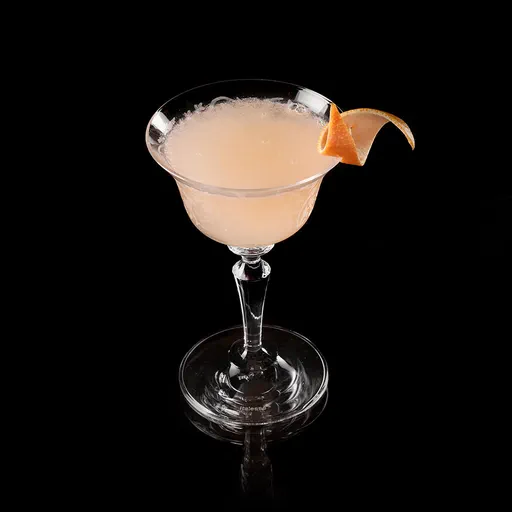
Combining elements of a classic Margarita and a Hemingway Daiquiri, hence the Ernest + Rita name, honouring Ernest Hemingway and the Marga"Rita". This...
View more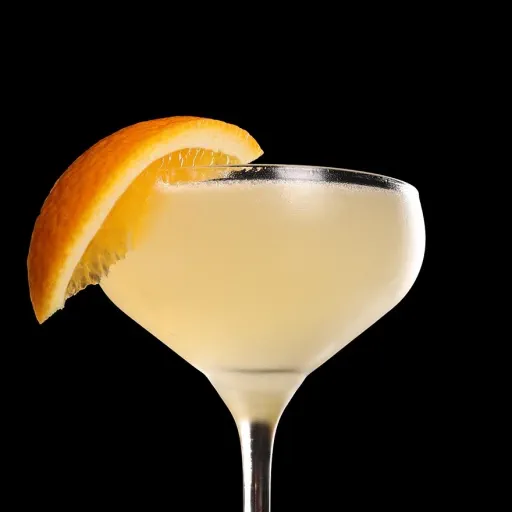
A dry, complex Margarita that lets the tequila's character shine.
View more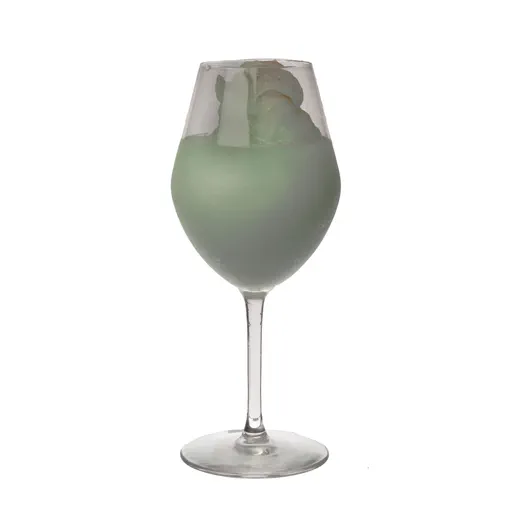
This white drink with the merest tint of absinthe green balances lemon, peach liqueur and lemon juice, rounded and made fluffy with egg white.
View more
Comments & Discussion
Be the first to comment on Gimlet.